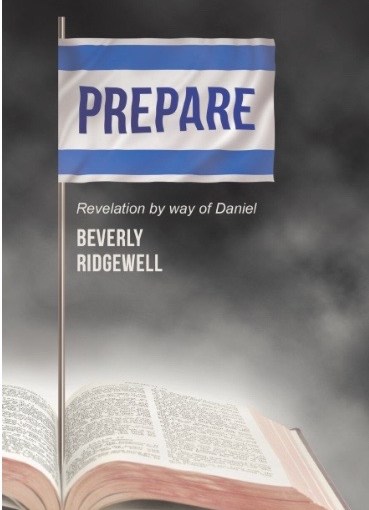
- Not understanding the role Israel plays in end time events. The majority of Christians today are Gentiles. Throughout the past 2000 years of church history, our Jewish roots were lost and germs of anti-Semitism entered instead. But without recognizing the important role that Israel plays in the end times, a distorted view results. Both Jesus and Daniel put the main focus on Israel during the last days. (Covering a subject of this magnitude requires its own future blog.)
- Not understanding the role that Christians will play in the end times. Most Christians get their view of end times by watching Left Behind movies and /or listening to their favorite preacher on t.v. However, I would challenge everyone to set all this aside for a time and just read the Word of God for yourselves. Read Matthew 24. Does it strike you that Jesus is speaking to His disciples as believers or just as Jews? Look at verse 9: “Then they will deliver YOU up to tribulation and kill YOU, and YOU will be hated by all nations FOR MY NAME’S SAKE.” Doesn’t it strike you as odd that the Lord would go into such tremendous detail about end times in the gospels, the epistles, and the book of Revelation for a church that wouldn’t even be here for at least some of it?
- Majoring on extrabiblical sources. The Bible says the word of God is “pure.” Therefore, you can drink from it and not take in any contamination. When you drink from extrabiblical sources, you may have some truth or water in it, but you will also be taking in contamination. Do you really want to be drinking contaminated water? Prophetic interpretation must hold as tight as possible to scripture and resist the tendency to drift into men’s opinions and extrabiblical sources! Especially if these opinions or sources appear to contradict what is written in scripture.
- Giving an interpretation that has not been laid out in scripture. Men’s interpretations of symbols found within the book of Revelation can sound VERY persuasive and logical. But the Bible interprets itself! God did not leave scriptural symbols up to man’s opinion. A good example of this is the SIGN of the woman in Revelation chapter 12. What this SIGN actually represents is the nation of Israel which grew out of the sun, moon, and 12 stars of Genesis 37:9-10. What this SIGN is not, is Mary the mother of Jesus.
- Accepting as doctrine, the theology of men. There are some things being taught & accepted as doctrine by the body of Christ, which can be argued and even refuted by scripture. Two examples are the “doctrine” of imminence (Christ can appear at any time) and the “doctrine” of signlessness (no prophesied events have to occur before the return of Christ).
- Speeding through scripture and failing to really HEAR what is being said. At the end of every letter to His churches, Jesus would say the same thing: “He who has an ear, let him hear what the Spirit says to the churches.” Apparently, there is a problem with the church failing to heed what God is saying.
- Not considering a verse of scripture within its passage. Many verses of scripture that people quote to prove their point, mean just the opposite when read within its context or passage. A good example of this is the infamous phrase “as a thief in the night.” In its true context, it is the unbelieving world that will be caught “like a thief.” “But YOU, BRETHREN, are not in darkness, so that this Day should overtake you as a thief,” (1 Thessalonians 5:4).
- Putting Fox News on equal footing with the book of Revelation. The spin is different, trust me. As one pastor observed: “The church is getting its patriotism mixed up with its Christianity.” We are on dangerous ground when we believe a world leader could lead the church into victory over Satan.
- Making scripture complicated. Someone once wisely put it this way: “When the plain sense of scripture makes good sense, seek no other sense or you will end up with nonsense.” We need to follow this good advice. God is not devious; He does not follow the occult’s secret ways. He is out to reveal & explain. Satan is out to twist, hide, pervert, or complicate things. The obvious meaning of a passage of scripture is usually the accurate one. That obvious-sounding rapture passage in Matthew 24:30-31 & Mark 13:26-27 is just that!
- Making scripture complicated, part 2. In order to help us understand Revelation, God set an order inside of it. That order is: first, the breaking of the seals; then trumpets; then bowls. This is the outline upon which the book of Revelation rests. Sections that seem to veer off this outline are, in fact, what theologians call “parenthetical chapters”. These are areas where the Holy Spirit briefly pauses the action and pulls us aside in order to give more insight into events happening in and around the seals, trumpets, and bowls.
- Failing to heed the ancient, traditional view of prophecy by replacing it with a more “modern” interpretation. The traditional view of the rapture of the church by the early church fathers (those who succeeded the apostles) is different than the one now popularly being taught. This in itself should give us pause. In the study of antiquities, there is an old adage: The closer to the original source, the better. In 2 Thessalonians 2:15, Paul exhorted the church to “stand fast and hold the traditions which you were taught, whether by word or our epistle.” Have we done that?
- Discounting the accuracy of the Word of God. There is arising today an exaggerated and disturbing criticism of the traditional versions of the Bible. The suggestion being put forth is that these centuries-old versions, fail somehow in conveying the truth of God. While I would encourage every serious scholar of the Word to get an interlinear Hebrew-English Old Testament and a Greek-English New Testament, as well as a Strong’s Concordance to help give you a fuller understanding of certain, hard-to-understand verses, the traditional Bible versions remain accurate and inspired.
Teaching scripture— especially prophecy— is not to be taken lightly. The final warning at the end of Revelation needs to be taken more seriously by all of us:
“For I testify to everyone who hears the words of the prophecy of this book: If anyone adds to these things, God will add to him the plagues that are written in this book;
“And if anyone takes away from the words of the book of this prophecy, God shall take away his part from the Book of Life, from the holy city, and from the things which are written in this book,” (Revelation 22:18-19).
God is well able to watch over His word. The purity and accuracy of the word that we have been using for centuries is being guarded by Him!
 preparebridgewelldotcom